Airport semantic segmentation is fundamental to intelligent airport applications, yet there is currently no specialized dataset for this task. We introduce ASS, the first large-scale Airport Semantic Segmentation dataset tailored to airport scenarios. ASS comprises 18 common semantic categories, 250 videos, and over 140,000 frames with precise manual annotations. ASS covers a wide range of challenges inherent to airport surveillance, including intra-class diversity, unusual shapes, inter-class similarity, extreme multi-scale, class imbalance, target occlusion, illumination changes, and weather changes. ASS serves as a research resource for both image and video semantic segmentation in airport scenarios.
Since airports are security-restricted areas, we obtained data collection permission through cooperation with the Civil Aviation Administration of China. The data were collected at five major international airports in Southwest China. To ensure data diversity, we recorded over 5,000 short videos within a three-month collection period, with an average duration of 15 seconds and a frame rate of 30 FPS. The data collection equipment included four fixed cameras and one PTZ camera, with resolutions of 1280x960, 1440x1080, and 1920x1080. During data collection, we increased data diversity by varying collection times and adjusting camera angles and focal lengths. We then strictly selected the data according to diversity principles, retaining 250 videos totaling over 140,000 frames to form the ASS dataset.
Dataset
ASS consists of 250 video sequences containing over 140,000 frames and their corresponding semantic segmentation ground truth. ASS contains multiple challenges as follows.
Weather Changes: Airport surveillance is affected by changing weather conditions, especially rain and fog. Reduced visibility and blurred object boundaries make accurate segmentation difficult.
Inter-class Similarity: Some airport categories have similar visual appearances. For example, white airplanes can be difficult to distinguish from the gray-white airport ground.
Extreme Multi-scale: Nearby objects with clear details and distant objects with blurred outlines may appear in the same view. This extreme scale variation is difficult for segmentation models to handle consistently.
Illumination Changes: Airport scenes exhibit substantial illumination changes from day to night. Shadows, reflections, and non-uniform lighting further alter object appearance.
Intra-class Diversity: The same category can vary substantially in appearance. Examples include airplanes viewed from different angles, loaded and unloaded trailers, and high-pole lights during the day and at night.
Unusual Shapes: Airplanes have non-compact wingspan shapes, while runways and high-pole lights are elongated. These unusual shapes are difficult to segment completely.
Target Occlusion: Airport objects frequently occlude one another, sometimes leaving only a small portion visible. Such occlusion can significantly alter object appearance and shape.
Class Imbalance: Semantic categories differ greatly in occurrence frequency and pixel area. Large background classes occupy most pixels, while small objects such as people and signs occupy only limited areas.
Ground Truth
ASS provides precise pixel-wise ground truth generated entirely through manual annotation. A total of twenty-one students participated in ground-truth generation, which took several months.
-
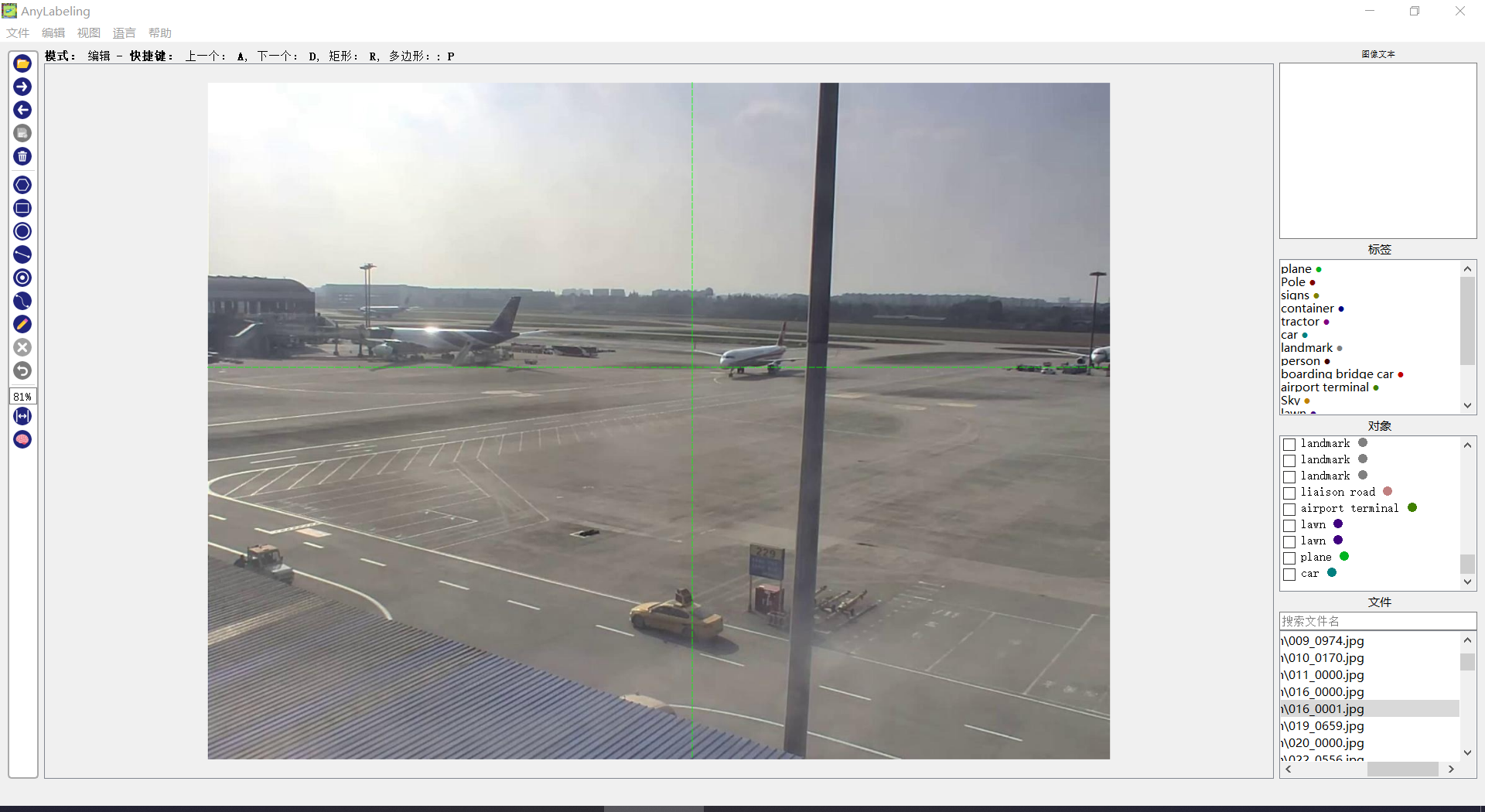
Label Interface
-
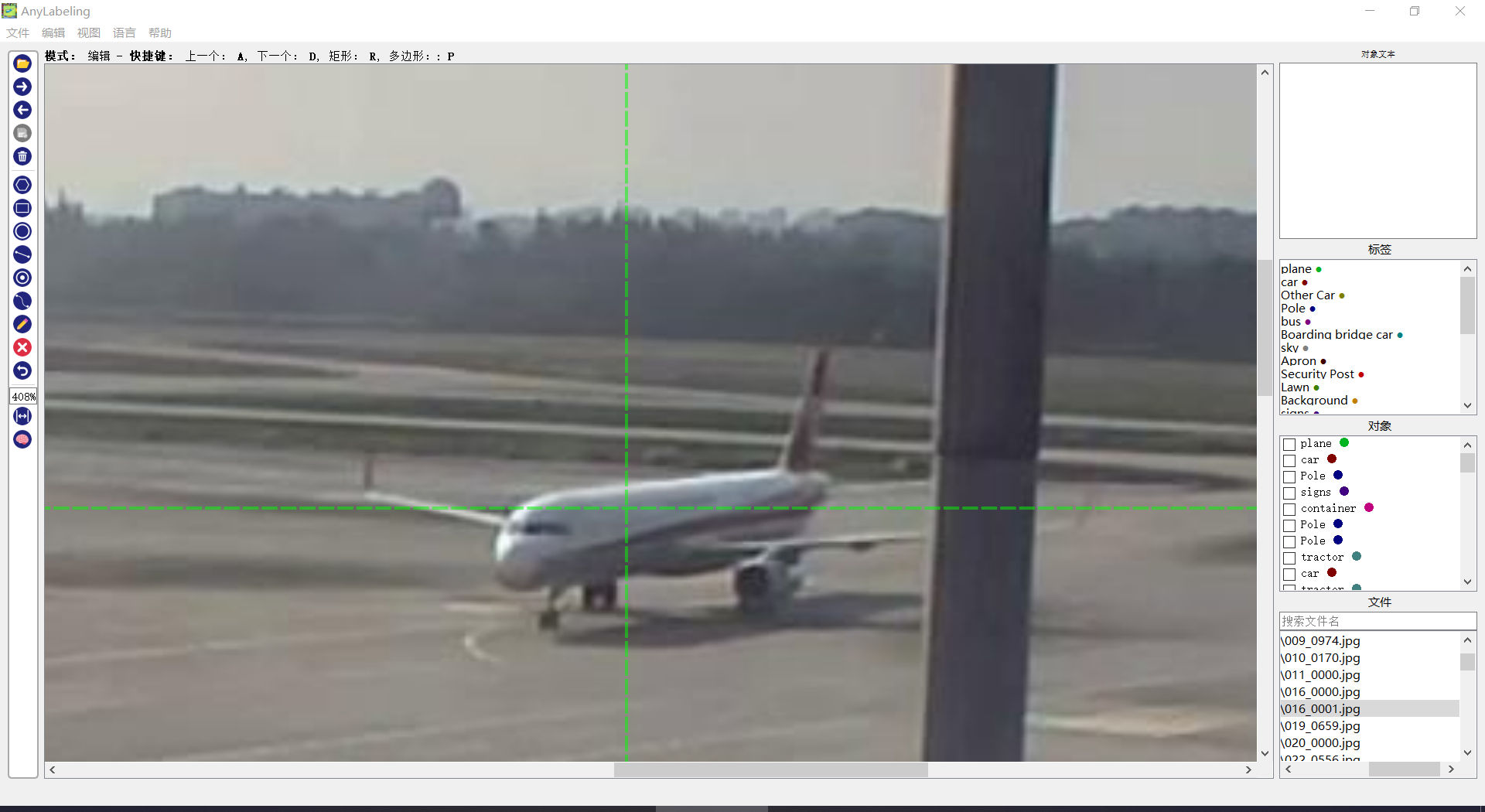
Zoom in to Annotate
-

Annotate contour
-
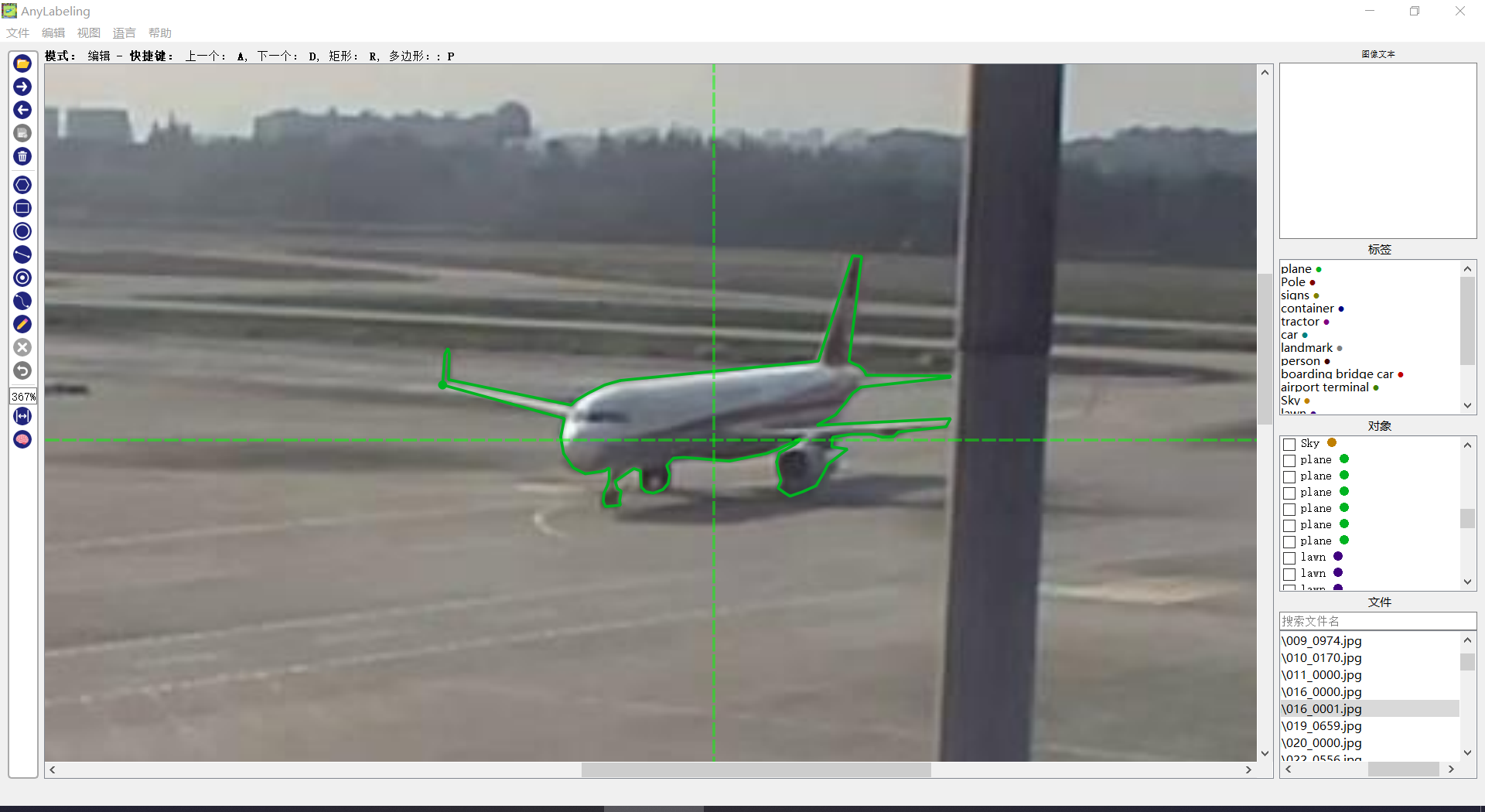
Annotate Mask
-
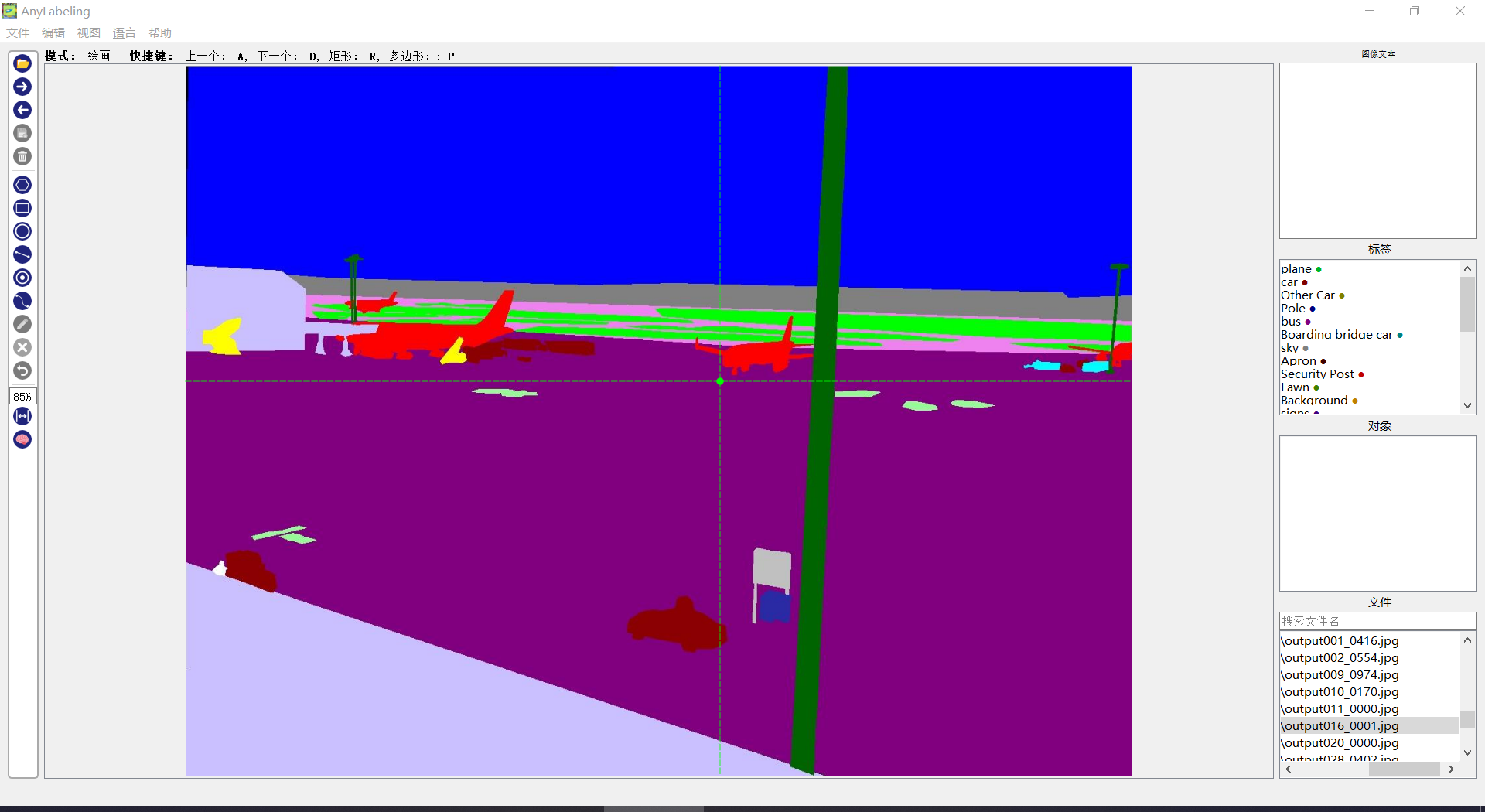
Annotation result